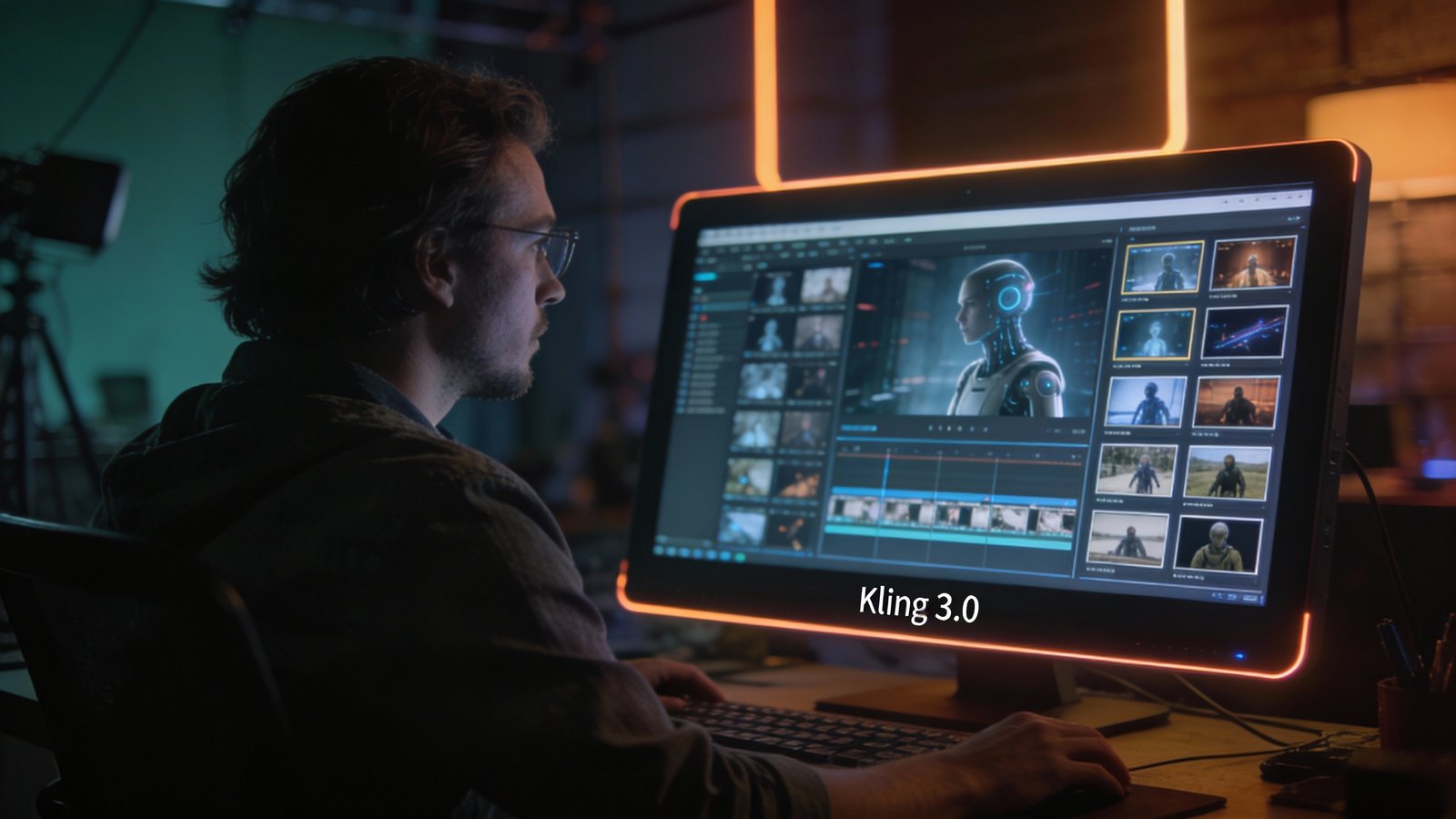
Music videos have always been a powerful way to connect sound with emotion. From MTV-era storytelling to today’s short-form visual loops on social media, the format keeps evolving. What has changed most in recent years is how music videos are created. You no longer need a full production crew, expensive cameras, or weeks of post-production to bring a song to life visually. AI-driven video generation has made high-quality music visuals accessible to independent artists, creators, and marketers alike.
Kling 3.0 sits at the center of this shift. By combining cinematic video generation, native audio handling, and AI-powered directing, it allows creators to turn musical ideas into polished visuals quickly. Understanding how to use it properly is the key to creating AI music videos that feel intentional rather than automated.
Why are AI music videos gaining popularity so fast?
AI music videos are growing because they match how audiences consume content today. People want visually engaging videos that feel fresh, fast, and emotionally aligned with the music.
According to recent industry reports, video content increases music discovery rates by over 60 percent compared to audio-only releases. On platforms like YouTube Shorts, Instagram Reels, and TikTok, songs paired with compelling visuals are far more likely to trend. AI-generated videos make it possible to produce multiple visual interpretations of the same track, helping artists test what resonates without large budgets.
This accessibility is pushing more musicians, indie labels, and content creators toward AI-based workflows.
What makes Kling 3.0 suitable for music videos?
Kling 3.0 is designed around short, cinematic storytelling, which aligns perfectly with modern music video formats. Instead of producing long, linear videos, many artists now focus on impactful 10 to 15 second sequences that loop naturally and highlight a specific mood or beat drop.
The platform supports multi-shot consistency, meaning characters, environments, and lighting remain coherent throughout the clip. This is critical for music videos, where visual rhythm needs to match audio rhythm. Kling 3.0 also supports seamless audio and voice integration, reducing the disconnect that often appears in earlier AI-generated videos.
When used through invideo workflows, creators can move from idea to finished clip in a fraction of the time traditional editing requires.
How should you plan a music video before generating it?
Planning still matters, even with AI. The best AI music videos start with a clear creative direction.
Instead of thinking in terms of a full narrative, it helps to focus on a single emotion, visual motif, or moment in the song. Is the track energetic, moody, nostalgic, or cinematic? Defining this upfront helps guide prompts and visual choices. Research shows that viewers form an impression of a video within the first three seconds, so clarity of intent is critical.
Many successful creators sketch out a rough visual arc aligned with the song’s structure, such as intro, chorus, or drop, then generate separate clips that can be stitched or looped seamlessly.
How do prompts influence the final music video output?
Prompts are the creative engine behind AI-generated videos. For music videos, prompts should emphasize mood, motion, and atmosphere rather than literal storytelling.
Describing lighting, camera movement, and emotional tone produces stronger results than overly detailed narratives. For example, specifying cinematic lighting, slow-motion movement, or dynamic camera pans helps the AI generate visuals that feel musical rather than static. Small prompt adjustments can lead to major differences in pacing and visual energy.
Creators who experiment with multiple prompt versions often discover that one variation dramatically outperforms others in engagement. This ability to test quickly is one of the biggest advantages of AI-driven creation.
How does visual rhythm affect music video engagement?
Visual rhythm is just as important as audio rhythm. When visuals sync naturally with beats, transitions, or drops, viewers are more likely to watch the video repeatedly.
Kling 3.0 supports smooth transitions and motion continuity, which helps maintain rhythm even in short clips. Studies on short-form video performance show that videos with consistent motion patterns retain viewers up to 25 percent longer than those with abrupt visual changes. This is especially important for looped music videos designed for social feeds.
By matching camera movement and scene changes to musical elements, creators can increase both watch time and shareability.
How can creators scale music video production efficiently?
Modern music promotion often requires multiple visuals for the same track. Artists may need teaser clips, lyric visuals, looped Shorts, and full-length background visuals for streaming platforms.
AI-driven workflows make this scalable. Using Kling AI 3.0 alongside tools like invideo allows creators to generate multiple versions of a music video quickly, each tailored to a specific platform. This approach aligns with how audiences consume music today, where discovery often happens through short clips rather than full videos.
For creators who manage content on mobile or want to refine visuals on the go, integrating an ai video generator app into the workflow makes iteration faster and more flexible. Mobile-first creation is increasingly important, with over 70 percent of short-form videos now uploaded directly from smartphones.
How important is audio alignment in AI music videos?
Audio alignment can make or break a music video. Even visually stunning clips fail if they feel disconnected from the music.
Kling 3.0’s native audio handling ensures that visuals align naturally with sound. This reduces the need for manual syncing and prevents the slight timing issues that often occur when audio is added later. Research from social video platforms shows that videos with clear audio synchronization see significantly higher completion rates and engagement.
For music videos, this means the emotional impact of the song carries through visually without distraction.
How can artists use AI music videos for promotion?
AI music videos are not just creative experiments. They are powerful marketing tools.
Artists use short AI-generated clips for pre-release teasers, chorus highlights, and visual hooks designed to drive streams. Brands and labels also use these visuals for ads, social posts, and playlist promotion. Because AI-generated videos are faster to produce, creators can react to trends or audience feedback in real time.
This agility gives independent artists a competitive edge, allowing them to stay visible without large promotional budgets.
How does Kling 3.0 compare to traditional music video production?
Traditional music video production involves filming, editing, color grading, and sound syncing, often over several weeks. While the results can be exceptional, the cost and time investment limit how often artists can release new visuals.
Kling 3.0 shifts the focus from execution to creativity. Instead of worrying about equipment or logistics, creators spend more time refining ideas and experimenting with style. This does not replace high-end production for major releases, but it opens the door for frequent, high-quality content that keeps audiences engaged between releases.
Conclusion
AI music videos are redefining how artists visualize sound. They offer a faster, more flexible way to create visuals that feel cinematic, emotional, and platform-ready. Kling 3.0 makes this process accessible by combining consistent multi-shot visuals, native audio integration, and AI-powered directing into a single workflow.
By approaching AI music videos with clear creative intent, thoughtful prompts, and an understanding of visual rhythm, creators can produce compelling content that resonates with modern audiences. When paired with invideo workflows, Kling 3.0 becomes a practical solution for artists who want to scale their visual presence without sacrificing quality or creativity.
